
Introduction to QR codes
QR codes were invented in Japan in the 1990s to track manufacturing. They've evolved into a ubiquitous tool for connecting people to digital information. The bar code on a cereal box is ancient history; these days, codes are everywhere from storefronts to restaurant menus to concert posters. The best part? You don't need special equipment or expensive software to create one. A browser and a generator are all you need.
Can you get a free QR code?
Yes, absolutely. You can generate QR codes for free. A number of online generators, including freeqrcodegenerator.com, let you create codes at no cost. These are called static QR codes, and they work perfectly for permanent information you won't need to change.
What are static QR codes?
Static QR codes encode data directly into the image itself. Once created, the content is locked. Your phone number, website URL, or email address stays the same forever. The code never expires, never needs updating, and requires zero maintenance. That simplicity is why free static codes are so practical, they just work indefinitely.
Creating QR codes for free
- Choose a reliable QR code generator: Pick a straightforward tool like freeqrcodegenerator.com. You don't need anything fancy.
- Enter your data: Input the URL, text, or contact information you want to encode.
- Customize your QR code: Add colors, change patterns, or embed a logo to match your brand.
- Generate and download: Create the code and download in a format like PNG, JPG, or SVG.
Benefits of free QR codes

- Cost efficiency: They're free. Zero financial outlay while offering a versatile tool for marketing and information sharing.
- Ease of access: Anyone with an internet connection can create QR codes. No specialized software required.
- Wide reach: Any smartphone can scan them. You're not locking anyone out.
Is QR code free for life?
Static codes made with a free generator stay functional forever. They don't expire. They don't get deleted. As long as what you're linking to (your website, email, phone number) remains the same, your free static code works indefinitely.
Dynamic QR codes offer more flexibility but cost money. They let you change what the code points to without recreating it. Useful if you're running campaigns where the destination changes or if you want to track scan data. But that power comes with a price.
Static vs. Dynamic QR codes: Which to choose?
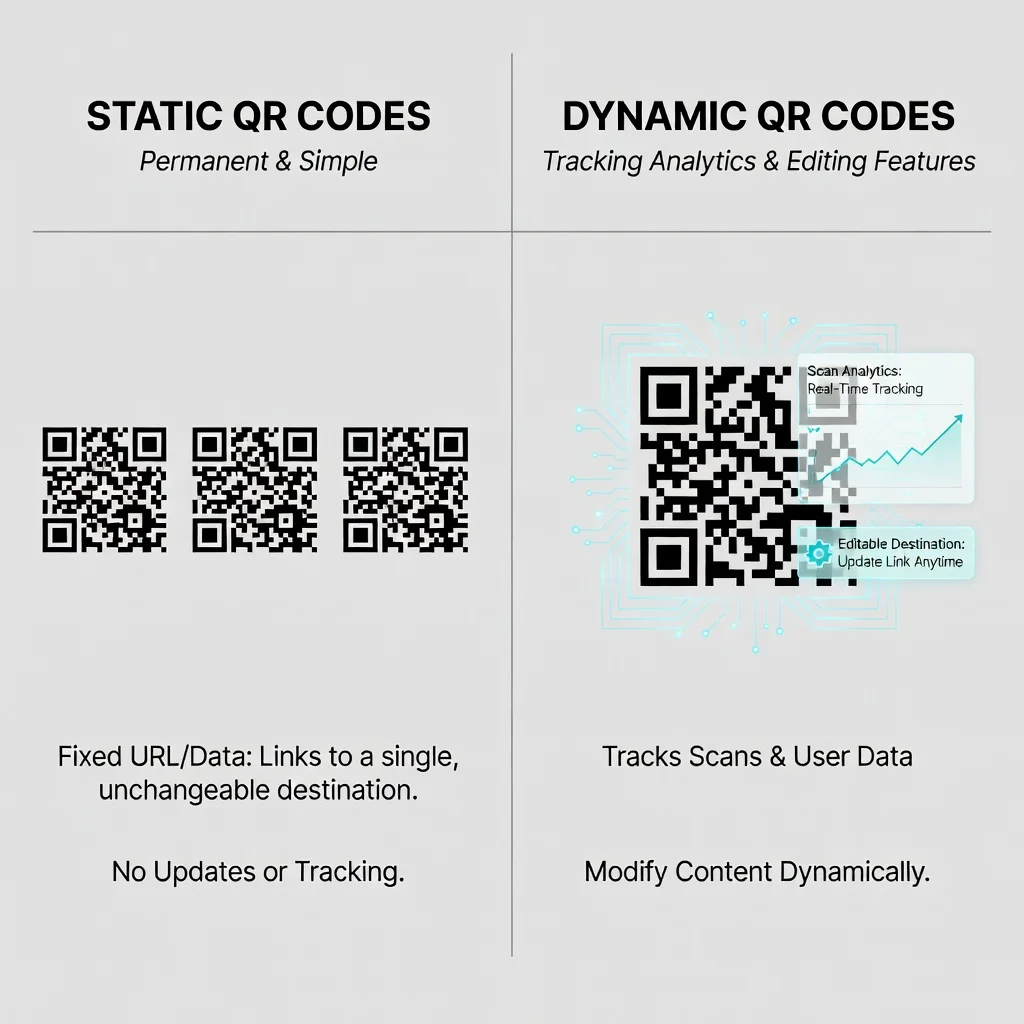
Use static QR codes for:
- Information that won't change (your company website, contact number, email)
- Permanent placements like business cards or signage
- Situations where you want zero ongoing costs or maintenance
Use dynamic QR codes for:
- Marketing campaigns where the destination changes (seasonal promotions, rotating content)
- Situations where you need tracking and analytics on scan performance
- Campaigns where you want to test different landing pages
Types of data you can encode
- URLs: Direct users to a website or a specific webpage.
- Plain text: Provide information directly through the code.
- Contact information: Share business cards or contact details in a digital business card format.
- Emails: Set up a pre-filled email message that users can send with a single scan.
- SMS: Prepare a predefined text message that users can send to a specific number.
- Wi-Fi access: Share Wi-Fi credentials securely.
Best practices for QR code usage
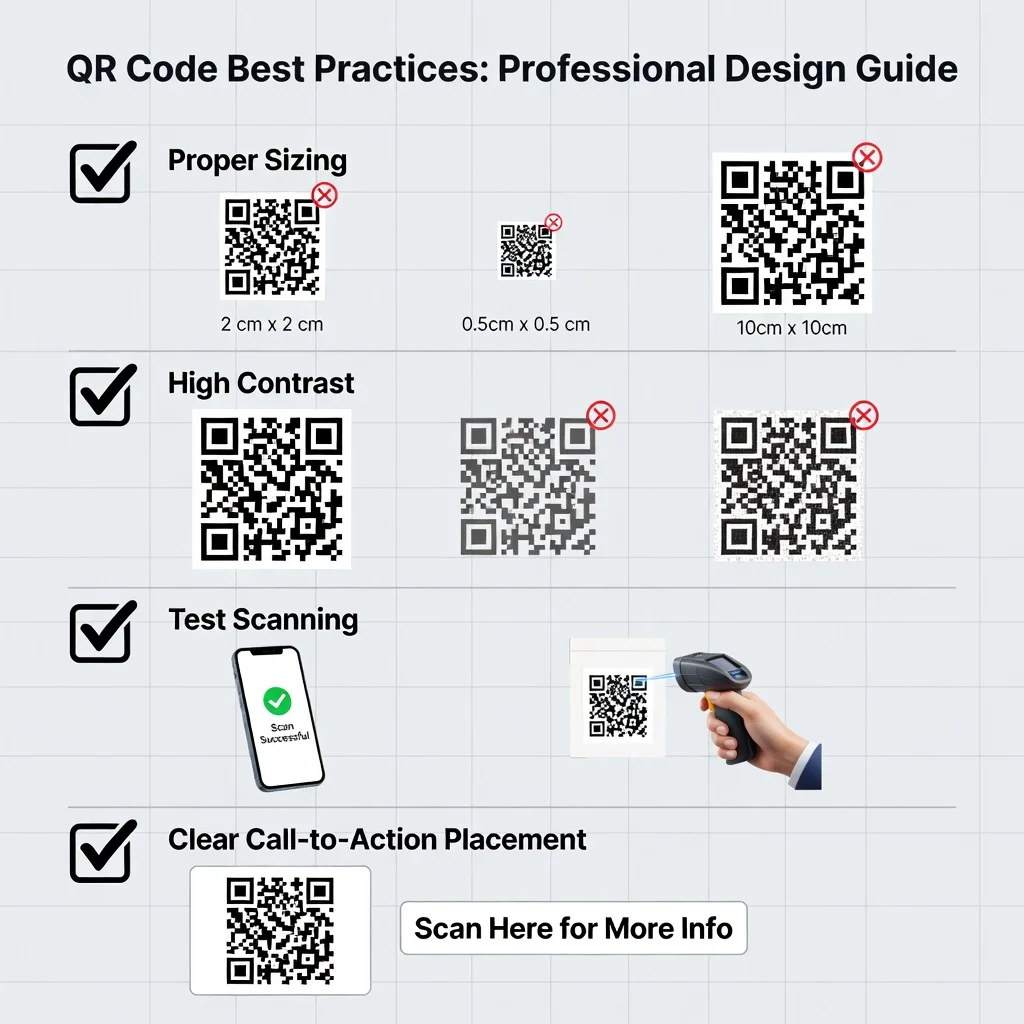
- Optimal size and placement: Make your codes at least 2×2 cm and place them somewhere people can actually see and scan them easily.
- Error correction: Choose the right error correction level so your code stays readable even if part of it gets obscured or damaged.
- Test before deploying: Scan your code on multiple devices and apps before you print or publish it.
- High contrast: Dark codes on light backgrounds work best. Avoid color combinations that make scanning difficult.
Conclusion
Free QR codes are genuinely useful. Whether you want to share your website, phone number, or contact details, generating a code costs nothing and takes minutes. The choice between static codes (free, permanent) and dynamic codes (paid, flexible, trackable) depends on your specific needs. For most people and most situations, free static QR codes solve the problem perfectly.