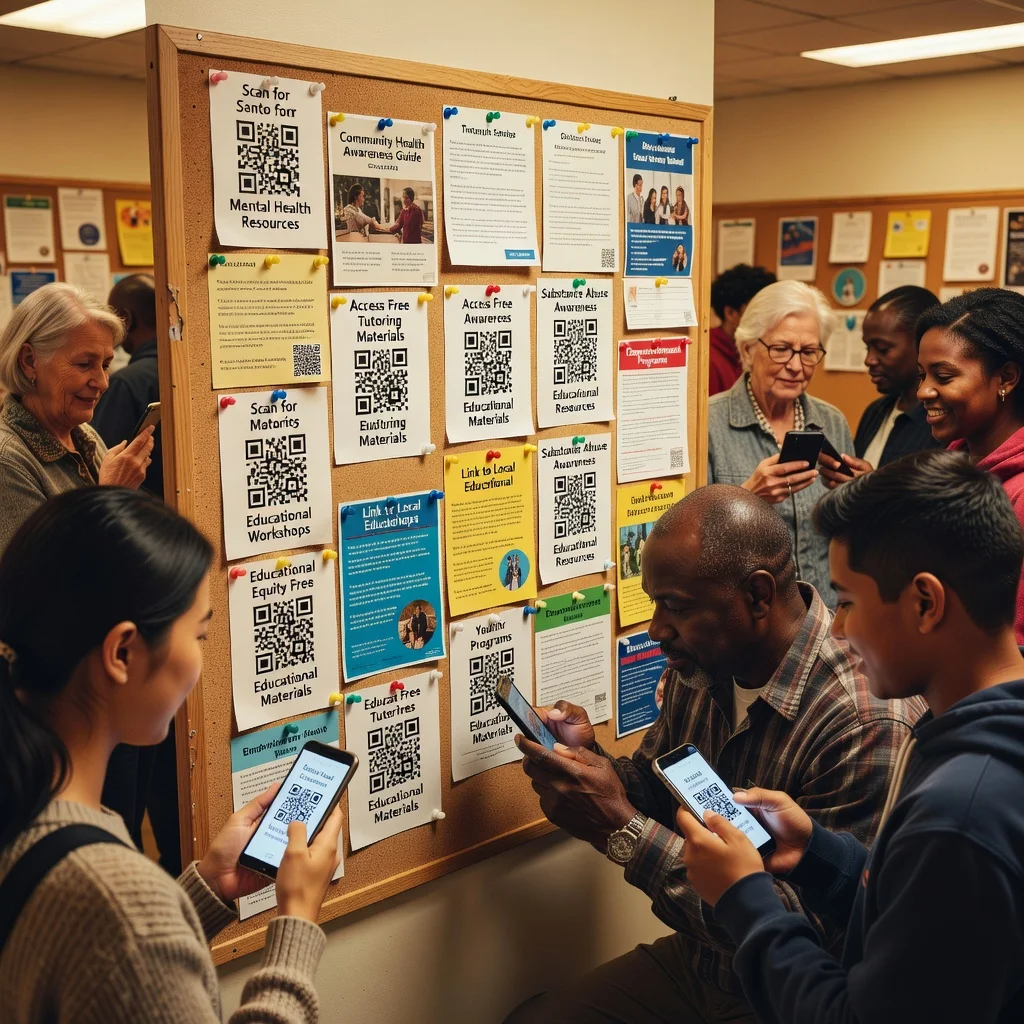
Bringing print marketing into the digital age
Your printed flyer sits on a bulletin board. Someone picks it up, reads it once, and maybe keeps it, but more likely, it ends up in a trash can. The problem with print is that it's inherently static. You can't update it, you can't measure who actually engaged with it, and you definitely can't track what they do next.
QR codes change that equation entirely. A single code turns your flat print piece into a gateway to information, offers, event registration, or direct purchasing. People scan, they're engaged, and you get real data about their interest.
Benefits of adding QR codes to print materials
Here's what actually happens when you add QR codes to your flyers and posters:
- Track exactly what works: You'll know precisely how many people scanned each piece of paper. Want to know which location pulled better? Which design? This is data most print marketers never get.
- Fit more information without clutter: Print space is expensive. A QR code lets you direct people to full product specs, pricing, event details, or whatever else your 8.5x11 can't accommodate.
- Direct to exactly where you want them: Special landing pages, event registration, coupon codes, appointment booking, you control where they go and what action you want them to take.
- Keep engagement flowing: That scan isn't the end of the journey. Direct people to email signup, social media follows, or product pages. One print piece becomes multiple touchpoints.
- Make changes without reprinting: Change your offer, update your link, or redirect to a different page. The physical flyer stays the same; only the destination changes.
- Skip the expensive ad spend: Print + QR costs less than most digital advertising, especially when you're targeting local or specific audiences.
- Surprising finding: higher conversion: Print materials with QR codes consistently outperform print alone. People trust physical materials, but they want digital convenience.
Creating QR codes for flyers and posters
Start by being clear about your goal. Are you directing people to register for an event? Download a coupon? Check out a product? Read an article? Each of these needs a different destination, and possibly different messaging on your print piece.
Build (or have your designer build) a landing page that actually reflects what your flyer promises. If the flyer says "Download your free guide," the landing page should have that guide available within one click. Mobile optimization is non-negotiable, most scans happen on phones.
Generate your dynamic QR code, test it on multiple phones, and watch how it renders at different sizes. A code that's too small won't scan reliably from a distance. Most flyers benefit from keeping your code at least 1 inch by 1 inch.
Design tips for eye-catching QR codes
Don't just stick a generic black-and-white square on your flyer. Your code should match your brand. Consider using your brand colors or adding your logo in the center. Just ensure there's enough contrast so the code still scans reliably.
Position your code where people's eyes naturally go, not hidden in a corner, but also not so dominant it overshadows your main message. Include a call-to-action near the code: "Scan for details," "Get your discount," "Learn more." Most people haven't scanned a QR code in years, so you need to tell them what to do.
QR code strategies for different print materials
Flyers and posters are just the start. Event posters can link directly to ticket sales. Business cards can direct to your LinkedIn or portfolio. Door hangers can show apartment leasing details. Vehicle wraps can promote your business's website. Window displays can create urgency by linking to limited-time offers.
The real value emerges when you use QR codes across multiple printed channels consistently. Same code destination, same tracking benefits, unified marketing message.
Content optimization for print-generated traffic
Your landing page is where the real work happens. Make sure it loads fast, people scanning from a bus shelter or store window often have spotty 4G. Keep it focused on a single action. Too many buttons and links confuse your visitors and kill conversions.
If your flyer is about a sale, show the discount code immediately. If it's about an event, make registration the obvious next step. The experience should feel like a continuation of the print piece, not a detour.
Measuring print campaign success with QR codes
This is where QR codes shine. You'll see how many scans each print piece generated, when people scanned (timing matters), and where they were (location data is valuable). More importantly, track what happens after the scan. How many converted? How many signed up? What was your actual return on the cost of printing?
Use this data to iterate. If one design outperformed another, print more of that design. If one location pulled better engagement, invest in distribution there.
Integrating print and digital marketing
QR codes solve a problem that's haunted print marketers forever: bridging the gap to digital. Your flyer gets someone's attention. The code gets them to take action. The landing page completes the conversation. It's a complete journey from paper to conversion.
Create your free QR code now. Try our free generator →