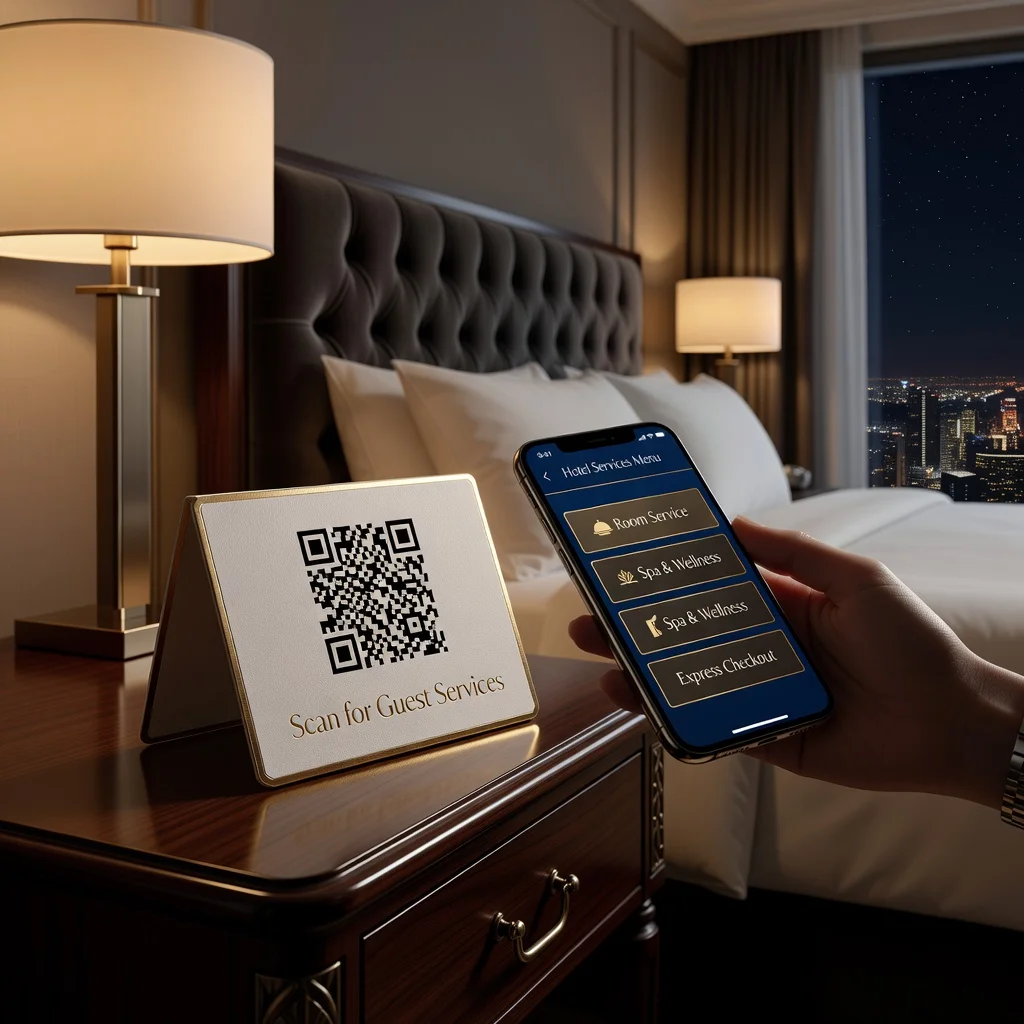
Revolutionizing the guest experience with QR codes
A guest checks into your hotel. They want to know about the pool hours, where the gym is, how to order room service, what restaurants are nearby. Traditionally, they call the front desk or look for a binder full of laminated sheets. With QR codes, they scan once and have everything they need on their phone.
Hotels that implement QR codes report significant increases in guest satisfaction and operational efficiency. It's not about being trendy, it's about solving real friction points in the guest experience.
Key applications of QR codes in hotels
Smart hotels use QR codes in multiple ways to enhance their operations and guest experience:
- Touchless check-in: Guests complete the registration process on their phone before arriving at the desk. Less waiting, fewer paper forms, faster check-in.
- Room information access: Guests scan a code on their room key, nightstand, or TV remote to get a guide to their specific room. Temperature controls, WiFi instructions, entertainment options, all on-demand.
- Restaurant and room service ordering: Instead of calling for service, guests scan a code and order directly through a mobile interface. Faster service, fewer errors, better records.
- Feedback and service requests: Simple scan to report issues, request housekeeping, or provide feedback. Data flows directly to staff, and guests get faster response times.
- Local attraction guides: Scan a code in the lobby and get recommendations for restaurants, attractions, and entertainment near your hotel. Personalized based on interests.
- Contactless payment: Pay for room service, spa services, or incidentals by scanning, no need to hand over payment cards or wait for bill processing.
- Upsell opportunities: Spa packages, late checkout, room upgrades. Present these through QR codes when guests are in a decision-making mindset.
Setting up hotel QR codes effectively
Every QR code in your hotel should serve a clear purpose. Don't clutter your rooms with codes for everything. Focus on the most-requested information: room controls, restaurant menus, checkout information, and local recommendations.
Make sure your mobile experience is excellent. Hotel guests often have limited time and spotty WiFi. Your destination pages need to be fast-loading and intuitive. A complicated interface defeats the purpose.
Staff training matters. Your team should be able to explain to guests what a code does, where to find the camera function on their phone, and why it's useful. A well-informed staff member can dramatically increase QR code adoption.
Integrating QR codes into room design
Placement matters. QR codes sized appropriately work best when they're visible but unobtrusive. A code on the nightstand is discoverable but doesn't dominate the room's design. Codes on TV remotes or room directories are practical placements.
Use consistent branding. Your QR codes should feel like part of your hotel experience, not random additions. Consider incorporating your logo or brand colors while maintaining scannability.
Guest data and preferences
Every QR code scan is a data point. Which amenities are guests most interested in? What time of day do they request service? Are certain room types underutilized because guests don't know about them? This information helps you improve operations and marketing.
Use QR codes to gather feedback efficiently. A simple scan-to-survey at checkout captures guest sentiment when they're thinking about their stay. This beats relying on random reviews and gives you actionable insight.
Managing QR codes at scale
If you operate multiple properties, manage your QR codes through a centralized system. Ensure that updating information (like restaurant hours or upcoming events) is easy and happens quickly. Nothing frustrates guests more than scanning a code that leads to outdated information.
Change codes seasonally if your offerings shift. If you close your pool in winter or switch restaurant menus seasonally, update the linked content to reflect reality.
Measuring success
Track which QR codes get scanned most frequently. This tells you what information guests actually want. Low-scan codes might indicate poor placement or unclear purpose. High-scan codes reveal where guest pain points exist, and where your solution is working.
Compare operational metrics before and after QR implementation. Are call volumes to the front desk declining? Is room service order accuracy improving? Are guests requesting faster service? These are the real indicators of success.
The bottom line
QR codes aren't a luxury in hospitality anymore, they're becoming expected. Guests appreciate the efficiency, your staff appreciates the reduced workload, and your operations improve. It's one of the few technology investments that benefits everyone.
Create your free QR code now. Try our free generator →