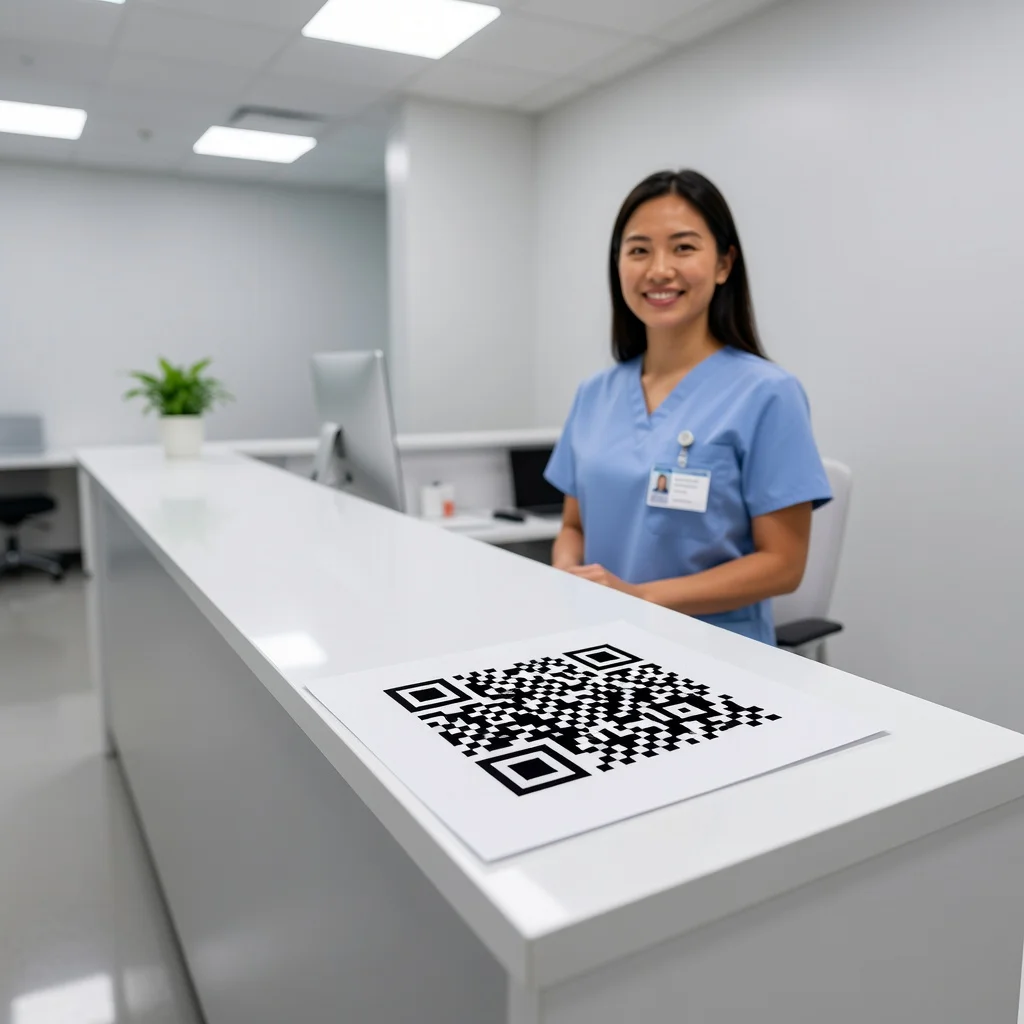
Transforming healthcare delivery with QR codes
Healthcare is complicated. Patients juggle multiple appointments, medications, insurance details, and medical history. Medical staff manage patient safety protocols, infection control, and verification procedures. Paper-based systems create bottlenecks and increase error risk.
QR codes streamline these processes without replacing the human interaction that matters in healthcare. They're not replacing doctors or nurses, they're eliminating the friction points that waste time and create mistakes.
Benefits of QR codes in healthcare settings
Healthcare organizations using QR codes see measurable improvements:
- Patient identification and safety: Scan a wristband code to instantly verify patient identity, allergies, medications, and medical history. Reduces medication errors and misidentification dramatically.
- Touchless check-in: Patients complete their paperwork and insurance information on their phone before arriving at the appointment. Reduces waiting time and paper waste.
- Medication tracking: Nurses scan medication codes and patient codes to verify correct medication, dosage, and patient before administration. Standard of care in many hospitals.
- Consent and documentation: Digital consent forms, updated medical history, and authorization signatures completed through QR-linked forms. Everything's timestamped and documented.
- Appointment reminders: Patients get calendar invitations through QR code links. Reduces no-shows and improves clinic efficiency.
- Medical device tracking: Medical equipment is labeled with QR codes. Staff scan to verify calibration status, maintenance records, and operational safety.
- Patient education: After appointments, patients scan a code to access educational materials relevant to their condition, medications, or upcoming procedures.
Implementing QR codes in patient care
Start with your most error-prone or time-consuming processes. Many hospitals begin with medication administration or patient identification, where errors have the highest risk. Pilot the system in one department, measure results, then expand.
Staff training is critical. Medical professionals need to understand why QR codes matter for patient safety, not just how to use them. When staff sees improvements in their workflow and knows they're reducing errors, adoption happens naturally.
Your QR codes must be durable. Hospital environments are harsh, codes get wet, dirty, and damaged. Use waterproof labels and place codes where they won't be accidentally covered.
Patient privacy and security
QR codes in healthcare handle sensitive information. Ensure that your QR code system is encrypted and compliant with HIPAA regulations. The URL should not expose patient data directly, it should reference secure server-side data.
Educate patients about QR codes in their care. Transparency builds trust. Let them know what information is accessed, why it's needed, and how it protects their safety.
Emergency department applications
Emergency rooms are chaos. Patients arrive injured or in distress, information is scattered, and speed is critical. QR codes help. Patients or their families scan a code to provide medical history rapidly. Triage staff can access critical information instantly. Insurance and ID information flows in seconds rather than minutes.
This is where QR codes make a tangible difference in patient outcomes. Faster access to medical history means faster treatment decisions.
Surgical and specialty care
Pre-surgical checklists, anesthesia records, surgical consent, all can be managed through QR codes. Surgeons can verify the correct procedure, correct patient, and correct site in seconds. This redundancy, verified through scanning, is a key safety measure.
Specialty clinics use QR codes for complex treatment tracking. Oncology centers manage radiation therapy records. Cardiology offices track cardiac testing results. The right information reaches the right clinician at the right time.
Improving patient experience
From the patient perspective, QR codes make healthcare feel more modern and efficient. Instead of sitting in a waiting room filling out the same forms they filled out last time, they check in digitally and get called back faster. It feels like progress.
Post-appointment communication through QR codes is more effective than paper instructions. Patients receive follow-up care instructions digitally, can refer back to them at home, and can click through to educational resources about their condition.
Measuring impact
Track metrics that matter: medication administration error rates, patient identification errors, check-in time, appointment no-show rates, staff time spent on administrative tasks. These numbers tell you whether your QR code implementation is actually improving care.
The future of healthcare access
QR codes are part of a broader shift toward digital-first healthcare. They're a tool that works today, with existing technology, at low cost, and with proven results. They're not flashy, but they're effective.
Create your free QR code now. Try our free generator →