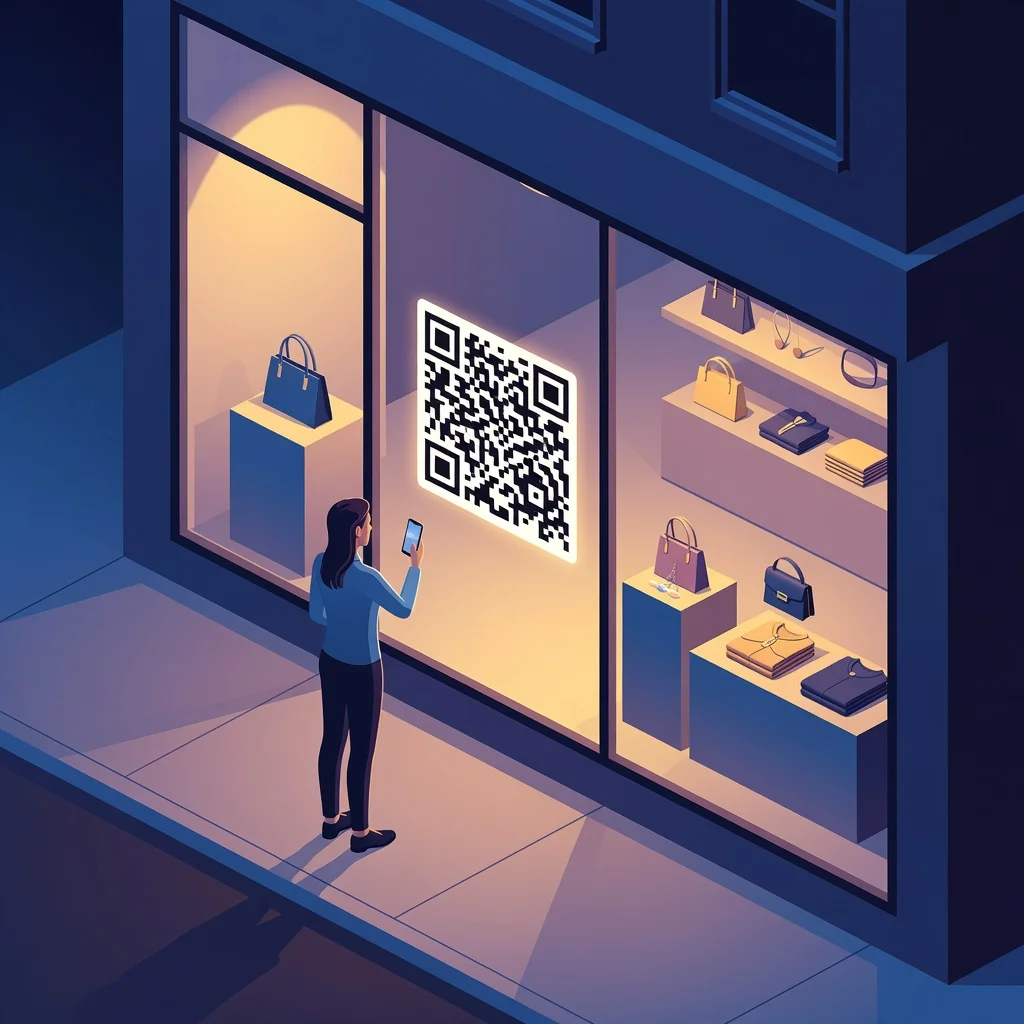
Revolutionizing retail with QR code technology
A customer stands in your store looking at a product. They want to know more: Is there a cheaper version online? What do other customers think? Does it come in a different color? Are there similar options from competitors? Traditionally, they'd ask an employee or open their phone and search Google. Either way, you've lost their attention.
QR codes give you control of that moment. You provide the information directly, right on the product or shelf. The customer stays engaged, learns what they need, and completes the purchase. It's retail optimization in a square code.
Benefits of QR codes in retail environments
Retailers implementing QR codes see real improvements in customer behavior and sales:
- Instant product information: Detailed specs, dimensions, materials, care instructions, all available with a scan. Answers customer questions before they ask.
- Customer reviews and ratings: Show real feedback from people who've bought the product. Customers trust peer reviews more than marketing copy.
- Price comparison transparency: Show your prices compared to major competitors. If you're competitive, this builds confidence. If you're not, you can adjust your strategy.
- Inventory visibility: Scan to see if the product is in stock in other sizes, colors, or nearby locations. Prevents "sorry, we're out" moments and increases conversion.
- One-click purchasing: QR code links to your mobile store. Customer can complete the purchase without leaving your store or switching browsers.
- Loyalty program enrollment: Quick signup to your loyalty program through a scan. Builds your customer database and enables future marketing.
- Video demonstrations: Video shows how to use complex products. Pictures and text don't capture operation or assembly, video does.
Strategic placement of retail QR codes
Don't just plaster codes everywhere. Strategic placement makes all the difference. High-ticket items benefit most from codes, customers want extensive information before dropping $500 on something. Impulse items don't need codes; people already know they want them.
Place codes where customers are naturally paused. At eye level on a shelf edge. On the price tag itself. On a sample display. On the product packaging. Each placement serves a different customer state.
Size your codes so customers can scan from a comfortable distance. A tiny code on a high shelf is frustrating. A clearly visible code at a reasonable height gets scanned.
Handling online price comparison
Customers will compare your prices to online retailers. Don't hide from this, embrace it. If your in-store experience adds value (immediate availability, expert advice, easy returns), your slightly higher price is justified. Your QR code messaging can highlight these advantages.
Alternatively, if you're cheaper, let the scan prove it. Nothing builds confidence faster than showing customer A the same product for $10 less than Retailer B.
Cross-selling and upselling with QR codes
When customers scan, direct them to related products or upgrades. Someone looking at a basic phone case might see premium options. Someone checking a base model device might see pro models. These recommendations, shown at the moment of consideration, drive higher-ticket sales.
Training your store staff
Your employees need to understand QR codes and be able to explain them to customers. "Scan this to see reviews" or "Scan to check if we have your size" should be quick explanations your team gives naturally. Staff enthusiasm drives customer adoption.
Managing QR code content
Your QR code system should make it easy to update content without changing the physical codes. Change product information, pricing, or linked pages without printing new codes. This flexibility is the whole point of dynamic codes.
Audit your codes periodically. Remove codes from discontinued products. Update pricing and inventory information monthly. Dead codes or outdated information frustrate customers more than helpful codes impress them.
Measuring QR code impact
Track which products' codes get scanned most. What information drives engagement? Are customers scanning high-value items more than basics? This tells you where customer uncertainty exists and where your codes are most valuable.
Measure conversion impact. Compare conversion rates for products with active QR codes to those without. The lift in sales typically justifies the effort quickly.
Creating seamless in-store to online experience
QR codes can blur the line between in-store and online shopping. Customer finds product in store, scans for more details, completes purchase online if they prefer. You get the sale regardless of channel. This omnichannel approach is becoming standard in retail.
Create your free QR code now. Try our free generator →